
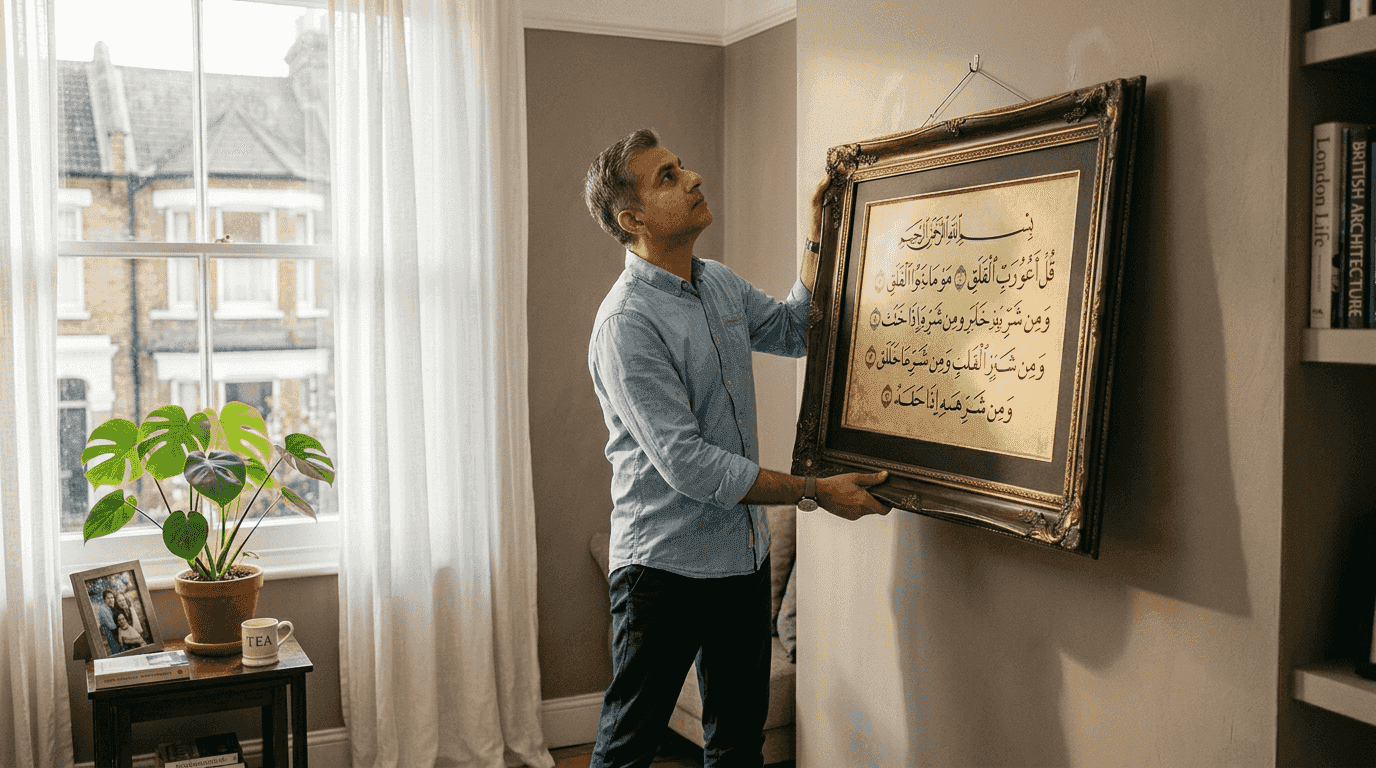
Framing Qur’anic wall art is a decision that many Muslims in London overlook, yet it profoundly impacts both the spiritual presence and physical longevity of sacred pieces. Framed artworks can last up to 50% longer in home conditions than unframed prints, offering tangible protection alongside aesthetic enhancement. This article explores how proper framing respects Islamic values whilst safeguarding your religious art for generations.
Table of Contents
Key takeaways
| Point | Details |
| Spiritual respect | Framing honours Qur’anic art by protecting sacred text from damage and demonstrating devotion through careful preservation |
| Physical protection | Acid-free materials and UV glass prevent yellowing, fading, and environmental deterioration that compromises unframed prints |
| Aesthetic enhancement | Frames create visual focal points that blend with Islamic decor whilst adding depth and spiritual warmth to Muslim homes |
| Practical maintenance | Framed art requires less cleaning, resists accidental damage, and maintains investment value through reduced handling |
| Cultural acceptance | 85% of Muslim advisors affirm that framing enhances reverence without diminishing the sacredness of religious art |
Understanding religious wall art in Islam
Qur’anic and Islamic calligraphy wall art holds a cherished place in Muslim homes across London and beyond. Qur’anic calligraphy is a central element of Islamic religious art, revered for its spiritual and cultural significance as a visual manifestation of God’s words. These pieces serve as constant reminders of faith, transforming living spaces into environments that nurture devotion and reflection.
The spiritual role of religious wall art extends beyond mere decoration. It embodies a Muslim’s connection to the Qur’an, bringing sacred verses into daily life where they can be contemplated during prayers, family gatherings, and quiet moments. This practice has deep cultural roots, with Islamic calligraphy adorning mosques, palaces, and homes throughout history.
Typical forms of religious wall art include:
-
Qur’anic calligraphy artworks featuring verses in traditional or contemporary styles
-
Geometric patterns interwoven with sacred phrases like Bismillah or Ayat al-Kursi
-
Names of Allah rendered in elegant Arabic script
-
Hadith quotations presented through artistic calligraphic compositions
-
Islamic architectural motifs incorporating religious text
These artworks express identity and devotion whilst beautifying Muslim homes with meaningful content that resonates spiritually.
The spiritual significance of framing religious art
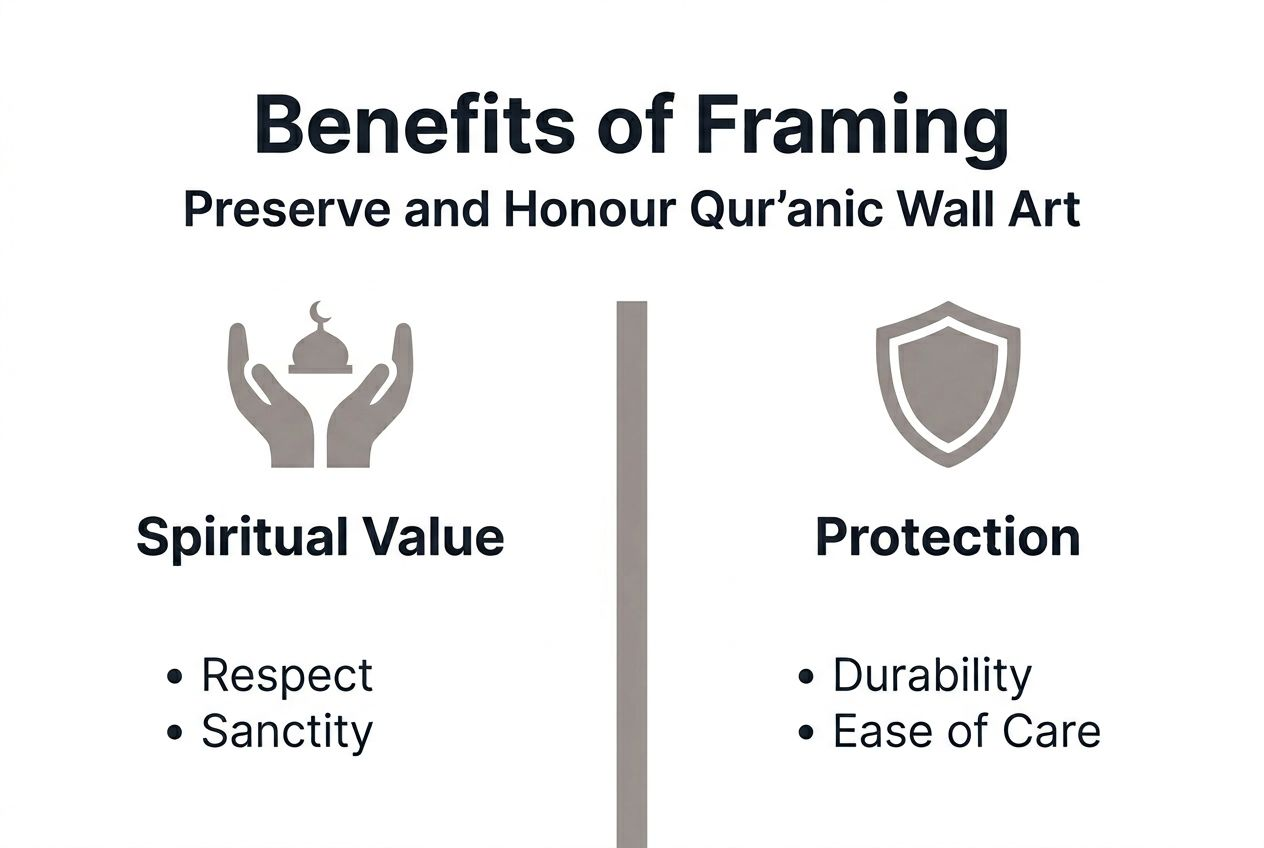
Framing Qur’anic art aligns naturally with Islamic values of respect, care, and sanctity towards sacred text. When you frame a piece containing God’s words, you demonstrate the same reverence shown when handling the Qur’an itself, protecting it from harm whilst displaying it prominently. This act of preservation mirrors the historical practice of ornate bindings and protective covers for holy books.
Historically, Muslims have used decorative frames in mosques and homes to honour religious calligraphy. These frames ranged from simple wooden borders to elaborate gilded designs, all serving the dual purpose of protection and beautification. 85% of Muslim cultural advisors agree that framing Qur’anic art enhances reverence without compromising sacredness, affirming that proper presentation strengthens rather than diminishes spiritual connection.
Framing expresses a Muslim’s identity and care for their faith in tangible ways:
-
It signals intentionality in creating a spiritually enriching home environment
-
It protects sacred text from disrespect through accidental damage or deterioration
-
It elevates the art’s status, distinguishing it from ordinary decorative items
-
It facilitates focused contemplation by creating a defined visual space
Some Muslims worry that framing commercialises or distances them from the sacred nature of the text. However, cultural scholars clarify this misconception:
“Framing Qur’anic art is not about altering its essence but about honouring and preserving it. The frame serves as a guardian, much like the cover of a mushaf, ensuring the words remain pristine for reverent viewing and reflection.”
This perspective reinforces that thoughtful framing enhances rather than compromises the spiritual integrity of religious art.
Why framing protects and preserves religious wall art
Physical protection is perhaps the most compelling practical reason to frame Qur’anic art. Unframed prints are 40-60% more susceptible to visible damage within a year than framed ones, facing threats from dust accumulation, moisture exposure, and airborne pollutants that cause irreversible deterioration. Frames create a barrier between delicate paper and these environmental hazards.
Acid-free matting prevents chemical reactions that cause paper yellowing and brittleness over time. Standard paper products contain acids that migrate into artwork, but museum-quality materials used in proper framing maintain the print’s original appearance for decades. UV-protective glass adds another layer of defence, filtering harmful light wavelengths that fade inks and pigments, especially crucial for pieces displayed near windows.
The frame itself provides structural support that prevents physical damage:
-
Tears and creases from accidental contact or handling
-
Warping caused by humidity fluctuations
-
Corner curling that develops in unprotected prints
-
Impact damage from bumps or falls
| Frame material | Durability | UV protection | Aesthetic appeal | Maintenance |
| Wood | High | With glass | Traditional warmth | Occasional dusting |
| Metal | Very high | With glass | Modern elegance | Minimal |
| Composite | Highest | With glass | Versatile styles | Very low |
Choosing frame materials for Islamic art preservation depends on your home’s conditions and aesthetic preferences, but all quality frames dramatically outperform leaving prints unprotected. Protective framing materials form a complete system that addresses every preservation concern.
Pro Tip: Position framed Qur’anic art away from direct sunlight and heat sources like radiators, even with UV glass. This simple placement choice extends preservation benefits and maintains vibrant colours indefinitely.
How framing enhances home decor with Qur’anic art
Framing transforms Qur’anic art into striking focal points that anchor room designs and create visual depth. The border created by a frame naturally draws the eye, establishing hierarchy in your decor and ensuring the sacred message receives the attention it deserves. This effect is particularly powerful in living rooms, entryways, and prayer spaces where the art sets the spiritual tone.
Frames can complement Islamic geometric and arabesque motifs found throughout Muslim homes. A well-chosen frame echoes patterns in rugs, tilework, or furniture, creating cohesive design that feels intentional rather than haphazard. Whether your London home features traditional Middle Eastern influences or contemporary minimalist aesthetics, appropriate framing bridges artistic styles seamlessly.
Muslim homeowners report increased satisfaction and spiritual connection when Qur’anic art is elegantly framed, noting that proper presentation adds warmth and gravitas to living spaces. The frame signals that the art matters, inviting family members and guests to pause and reflect rather than overlook it as mere wallpaper.
Framing considerations for home integration include:
-
Matching frame finish to existing wood tones in furniture and architectural details
-
Selecting metal frames for modern spaces with clean lines and neutral palettes
-
Choosing ornate frames for traditional rooms with rich textiles and classic furnishings
-
Considering frame width proportional to art size and wall space
The framed Islamic calligraphy impact extends beyond individual pieces to influence entire room atmospheres. Multiple framed works arranged thoughtfully create gallery walls that celebrate faith whilst demonstrating sophisticated design sensibility.
Pro Tip: Select frame colours and textures that either match or provide subtle contrast with your walls. Matching creates seamless integration, whilst contrast makes the art pop and command attention. Consider decorative framing styles that enhance rather than compete with the calligraphy.
Common misconceptions about framing religious art
Several myths prevent Muslims from framing their Qur’anic art, despite framing’s clear benefits. The most persistent misconception suggests that framing commercialises or disrespects sacred text by treating it as mere decoration. Cultural insights reveal the opposite: framing demonstrates care and investment in preserving God’s words, much like storing a physical Qur’an in a protective cover or designated space.
Another myth claims that Islamic tradition forbids framing religious texts. Historical evidence contradicts this, showing ornate frames in mosques and Muslim homes for centuries. From Ottoman palaces to Mughal residences, framed calligraphy has adorned walls as a respected art form. The practice honours both artistic skill and spiritual content without conflict.
Some believe framing is unnecessary, viewing it as optional decoration rather than essential preservation. Framing does not diminish the sacredness of Qur’anic art; instead it honours and preserves it against the inevitable deterioration that unprotected prints face. Without frames, even high-quality prints degrade noticeably within months in typical home environments.
Key misconceptions corrected:
-
Myth: Frames distance you from the sacred text. Reality: Frames protect whilst maintaining visibility and accessibility for contemplation.
-
Myth: Only unframed art shows authentic devotion. Reality: Proper preservation demonstrates deeper commitment to maintaining God’s words.
-
Myth: Framing is expensive vanity. Reality: Quality framing is an investment that extends art lifespan and enhances spiritual environment.
Muslim advisors validate framing’s appropriate role:
“There is no religious prohibition against framing Qur’anic art. The key consideration is respectful treatment, which framing facilitates by protecting the text from damage and presenting it with dignity. Choose framing that reflects care and reverence for the words it displays.”
Make informed decisions based on preservation facts and cultural acceptance rather than unfounded concerns.
Choosing the right frame for Qur’anic wall art
Selecting appropriate framing requires understanding materials, protective features, and aesthetic compatibility with Islamic art. Wood frames offer traditional warmth and suit classic calligraphy styles, with finishes ranging from natural oak to dark walnut that complement Arabic script beautifully. Metal frames provide modern elegance and exceptional durability, ideal for contemporary interpretations or minimalist spaces.
Composite frames combine materials for optimal protection and versatility. These frames resist warping better than solid wood whilst offering diverse aesthetic options. Regardless of frame material, two components are non-negotiable: acid-free matting and UV-protective glass. Selecting acid-free matting and UV glass is essential for preserving Qur’anic wall art against chemical and light damage.
| Feature | Wood frames | Metal frames | Composite frames |
| Durability | High, may warp in humidity | Very high, stable | Highest, engineered stability |
| Aesthetic | Traditional, warm | Modern, sleek | Versatile, various finishes |
| Cost | Moderate to high | Moderate | Low to moderate |
| Maintenance | Regular dusting, occasional polish | Minimal, wipe clean | Very low, stable finish |
| Weight | Moderate to heavy | Light to moderate | Light |
Matching frame style and colour to Islamic motifs enhances visual harmony. Consider whether your art features geometric patterns, flowing calligraphy, or both. Geometric designs often pair well with clean-lined frames, whilst flowing script benefits from frames with subtle decorative elements that echo the calligraphy’s movement.
Environmental considerations matter significantly:
-
High humidity areas require frames with superior moisture barriers
-
Rooms with abundant natural light demand maximum UV protection
-
Fluctuating temperatures necessitate stable composite materials
-
Dust-prone environments benefit from sealed frame backs
Explore frame style options for Qur’anic art that complement specific calligraphic styles and colour palettes. The right frame disappears into the art, enhancing without distracting, whilst protecting the precious content it surrounds. Consider frame materials for religious art that balance preservation needs with your home’s unique aesthetic.
Pro Tip: Consult framing specialists familiar with Islamic art when selecting materials. They understand how Arabic calligraphy interacts with different frame styles and can recommend solutions that honour both artistic and spiritual dimensions whilst ensuring museum-quality preservation.
Practical benefits of framing: maintenance and longevity
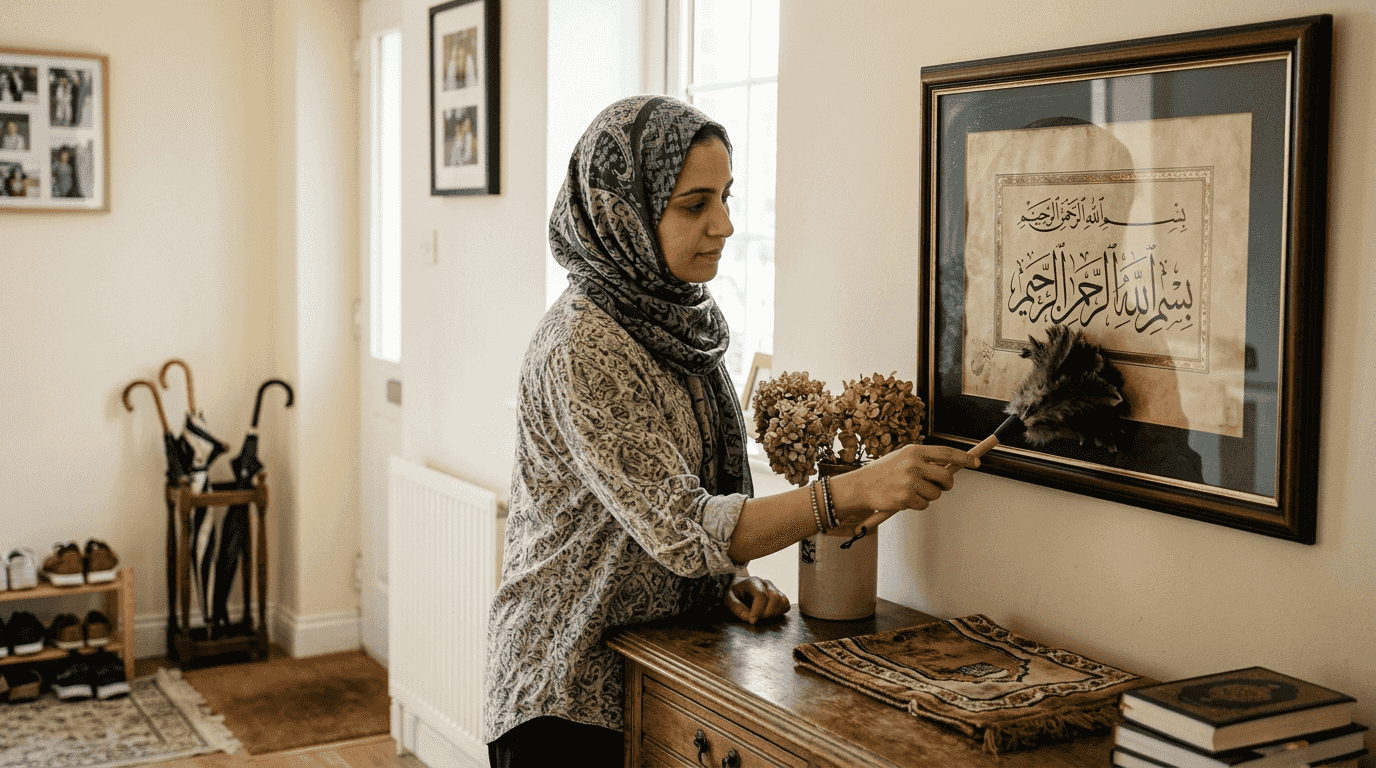
Framed Qur’anic art requires dramatically less maintenance than unframed prints, reducing both effort and risk of accidental damage during cleaning. Dust settles on frame glass rather than penetrating paper fibres, and a quick wipe with a microfibre cloth restores clarity without touching the artwork itself. Framing reduces cleaning frequency and handling damage, preserving art quality longer through minimal intervention.
Unframed prints require careful dusting that risks tears, smudges, or mishandling of delicate paper. Each cleaning session poses preservation risks that accumulate over time. Frames eliminate this concern, creating a protective barrier that keeps the art pristine whilst allowing easy exterior maintenance.
Frames facilitate safe transportation and repositioning when you rearrange rooms or move house. The rigid structure prevents bending, creasing, or corner damage that plagues loose prints during handling. This protection maintains your investment value, ensuring the art retains its appearance and spiritual impact for decades rather than degrading within years.
Long-term durability translates to better value:
-
Framed art maintains resale value if you choose to pass it on or sell
-
Protected prints avoid costly restoration that degraded pieces require
-
Preserved colours and paper condition sustain the art’s visual and spiritual impact
-
Reduced replacement costs over time as individual pieces last generations
Simple care practices for framed religious art maximise these benefits. Dust frame exteriors monthly with a soft cloth. Check periodically that hanging hardware remains secure. Avoid harsh chemical cleaners that might damage frame finishes or seep into sealed edges. Address any visible moisture or pest issues immediately to prevent frame interior compromise.
Discover the care benefits of framing Qur’anic art through proper material selection and mindful placement that work together to extend lifespan indefinitely with minimal effort.
Explore our curated Islamic wall art collections
Transform your London home with our carefully selected range of framed Qur’anic and Islamic wall art designed specifically for Muslim households seeking meaningful decor. Our Islamic calligraphy wall art collection features pieces printed on high-quality Luster pro paper, offering depth and detail that honour the sacred text whilst complementing diverse interior styles.
Each piece in our collection reflects the spiritual themes and protective framing principles discussed throughout this article. From dua and sabr prints that inspire daily reflection to comprehensive Islamic prints and wall art suitable for every room, we provide options that respect tradition whilst meeting contemporary aesthetic preferences. Explore our range to find framed art that preserves and honours your faith beautifully.
FAQ
How does framing enhance the spiritual meaning of Qur’anic art?
Framing protects sacred text from physical damage, demonstrating the same reverence Muslims show when handling the Qur’an itself. This act of preservation honours God’s words by ensuring they remain pristine and prominent in your home. The spiritual significance of framing lies in combining protection with intentional display that facilitates contemplation.
What types of framing materials are best for preserving Islamic wall art?
Acid-free matting and UV-protective glass with wood or composite frames offer optimal preservation. These materials prevent yellowing, fading, and environmental damage whilst maintaining structural stability. Quality framing materials for preservation ensure your Qur’anic art remains vibrant and intact for generations with minimal maintenance requirements.
Can framing Qur’anic art affect its sacredness or traditional respect?
Framing is widely accepted and considered a respectful means of honouring Qur’anic art without diminishing sacredness. Cultural advisors and historical precedent confirm that proper framing demonstrates devotion through careful preservation. The key is selecting framing that reflects reverence and treating the art with the same respect shown to sacred texts.
What maintenance is required for framed religious wall art?
Regular gentle dusting of frame exteriors, avoiding harsh chemical cleaners, and positioning art away from direct sunlight and moisture suffice for long-term preservation. Framed art requires dramatically less maintenance than unframed prints. Follow simple maintenance tips for framed art to ensure your pieces remain pristine with minimal effort whilst protecting their spiritual and aesthetic value.