
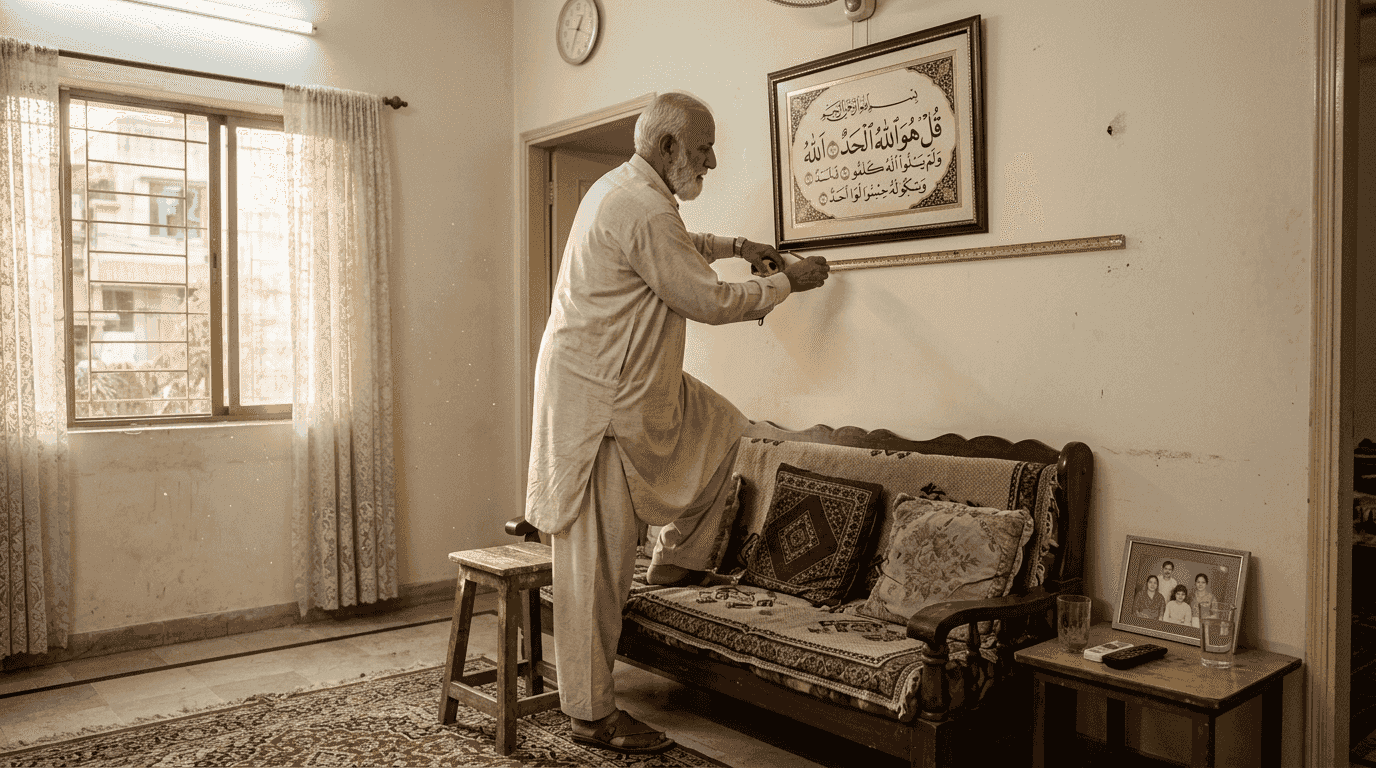
Many Pakistani Muslims want Islamic art at home but struggle with culturally respectful display. Qur'anic calligraphy and geometric motifs require thoughtful placement to enhance spiritual ambiance. This guide walks you through selecting, positioning, and caring for authentic prints. You'll create a harmonious environment that uplifts your family spiritually whilst honouring Islamic traditions. Following these steps ensures your home reflects both faith and cultural identity beautifully.
Table of Contents
- Understanding Cultural And Religious Considerations
- Prerequisites: What You Need Before Displaying Islamic Art
- Choosing The Right Islamic Art For Your Home
- Step-By-Step Guide To Displaying Islamic Art
- Maintenance And Care To Preserve Your Islamic Art
- Common Mistakes And How To Avoid Them
- Expected Outcomes: What To Expect From Proper Islamic Art Display
- Discover Authentic Islamic Art Prints At For Soouq
- Frequently Asked Questions
Key takeaways
| Point | Details |
|---|---|
| Cultural awareness is essential | Islamic art display requires respect for religious norms, avoiding figurative imagery and favouring calligraphy. |
| Authentic prints elevate spiritual value | High-quality materials like Luster Pro paper ensure durability and vibrancy for years. |
| Proper placement maximises impact | Prayer rooms and living areas are ideal; avoid kitchens and bathrooms to maintain reverence. |
| Regular maintenance extends lifespan | Dust twice weekly and inspect biannually to prevent fading, mould, and damage. |
| Avoid common display mistakes | Overcrowding walls and neglecting care diminish both aesthetic appeal and spiritual atmosphere. |
Understanding cultural and religious considerations
Islamic art in Pakistani homes must align with cultural and religious principles. 70% of Pakistani Muslim households prominently display Qur'anic calligraphy in living or prayer rooms for spiritual inspiration. Figurative imagery is avoided as per Islamic cultural norms. Instead, geometric patterns and Arabic calligraphy dominate.
Qur'anic verses hold sacred significance. Displaying them requires reverence and thoughtful positioning. They should inspire contemplation, not serve as mere decoration. This distinction shapes where and how you place prints in your home.
Placement choices reflect respect for the art's spiritual nature. Consider these principles when selecting and positioning Islamic art:
- Focus on non-figurative motifs like geometric patterns and calligraphy
- Display Qur'anic verses in clean, respectful spaces
- Position art to promote reflection and spiritual awareness
- Avoid placements that compromise the sacred nature of the content
"Islamic art is not just decoration; it is a visual expression of faith that transforms living spaces into environments of spiritual reflection and cultural pride."
Authentic Qur'anic calligraphy prints offer a meaningful way to incorporate these principles. They blend aesthetic beauty with spiritual depth. Your home becomes a space where faith and daily life integrate seamlessly.
Prerequisites: what you need before displaying Islamic art
Before hanging prints, gather essential tools and knowledge. Proper preparation prevents damage and ensures respectful installation. Start by selecting authentic prints from trusted Pakistani or international sources. Verify provenance to guarantee cultural and spiritual integrity.
Measure wall spaces accurately. Know exact dimensions before purchasing prints. This prevents sizing mismatches and wasted investment. Use a tape measure and note measurements for each intended location.
| Item | Purpose | Notes |
|---|---|---|
| Measuring tape | Accurate wall dimensions | Essential for sizing decisions |
| Level tool | Straight alignment | Prevents crooked displays |
| Mounting hardware | Secure installation | Must suit print weight and wall type |
| Microfiber cloths | Gentle cleaning | Prevents scratches during maintenance |
| LED accent lights | Highlight prints safely | Avoid heat damage from incandescent bulbs |
Basic mounting tools and knowledge are essential for a damage-free display. Choose hardware compatible with archival quality or Luster Pro paper. Standard nails may damage delicate prints. Wall anchors work better for heavier frames.
Lighting affects print longevity. Natural light causes fading over time. LED accent lights provide illumination without heat damage. Position them to highlight art whilst minimising direct exposure.
Gather these items before installation:
- Authentic Islamic prints from verified sources
- Measuring tape and level for precise placement
- Appropriate mounting hardware for your wall type
- Gentle cleaning tools like microfiber cloths
- LED lighting fixtures for accent illumination
Explore quality Islamic art materials and prints that meet these standards. Preparation ensures your display process runs smoothly. You'll avoid common installation mistakes that compromise both art and walls.
Choosing the right Islamic art for your home
Selecting appropriate Islamic art requires balancing aesthetics, authenticity, and budget. Popular motifs include geometric patterns, Arabic calligraphy, and Qur'anic verses. Each carries cultural significance and spiritual weight. Authentic Qur'anic calligraphy prints enhance spiritual ambiance more than generic motifs.
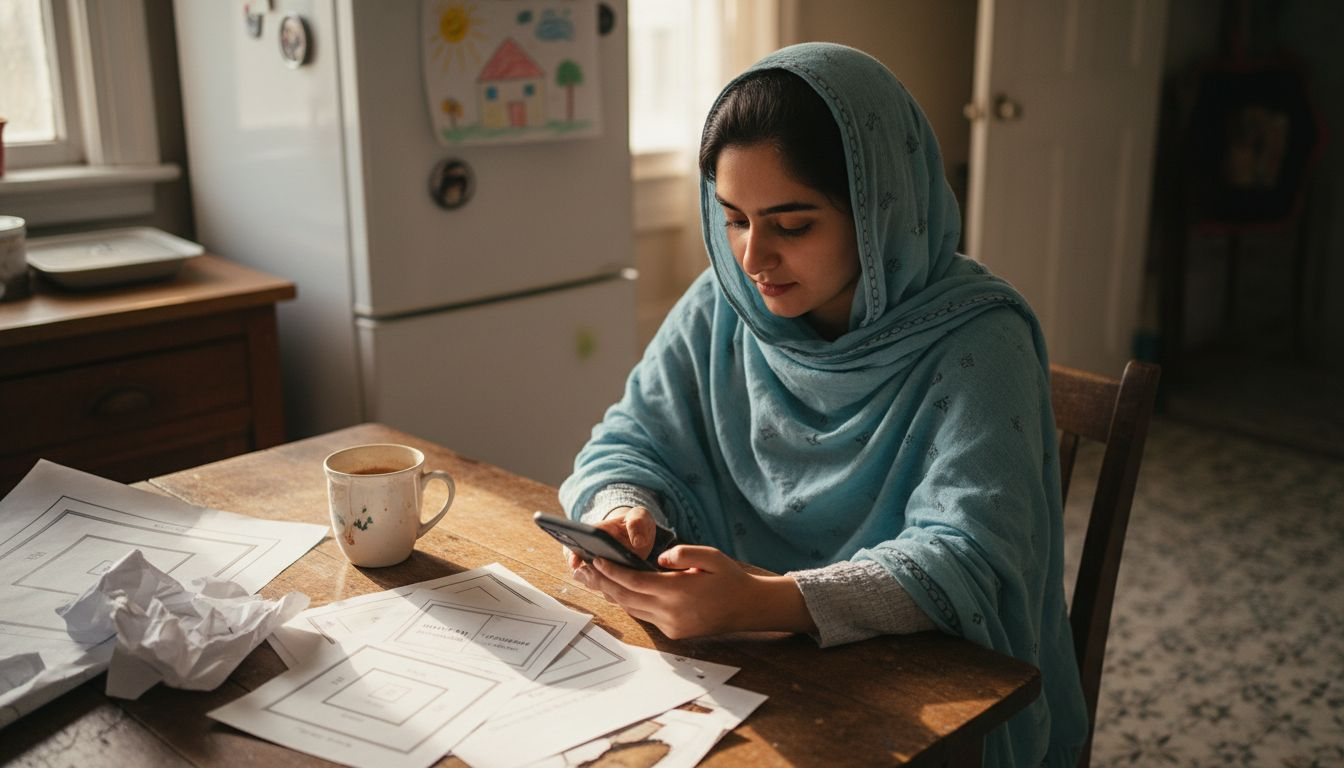
Quality materials determine longevity. Luster Pro paper offers superior durability compared to standard glossy options. It resists scratches, maintains vibrancy, and withstands environmental factors better. Investing in quality pays dividends through years of visual appeal.
Consider these selection criteria:
- Cultural alignment: Does the motif respect Islamic traditions?
- Material quality: Is the print on durable, archival paper?
- Authenticity: Can you verify the source and provenance?
- Aesthetic fit: Does the style complement your home's existing decor?
- Budget: Can you balance cost with quality and authenticity?
Avoid motifs that clash with Islamic cultural norms or Pakistani aesthetics. Generic patterns lacking cultural context feel hollow. They don't deliver the spiritual resonance authentic pieces provide. Prioritise prints with clear provenance to ensure cultural and spiritual integrity.
Pro Tip: Start with one or two statement pieces rather than filling walls immediately. This approach lets you assess how art integrates with your space. You can expand your collection thoughtfully over time.
Browse Qur'anic calligraphy prints and Islamic art prints to see quality options. Authentic pieces elevate your home's spiritual atmosphere. They create focal points that inspire reflection and pride.
Step-by-step guide to displaying Islamic art
Follow these ordered steps to display Islamic art beautifully and respectfully. Each stage builds on the previous one. Precision and care ensure lasting results.
-
Identify optimal rooms for display. Prayer areas and living rooms work best. These spaces balance visibility with reverence. Avoid kitchens and bathrooms where cultural respect may be compromised.
-
Measure wall spaces precisely. Use a tape measure to record height and width. Calculate centre points for balanced placement. Mark potential positions lightly with pencil.
-
Select appropriate print sizes. Match dimensions to wall space without overwhelming the area. Leave breathing room around each piece. This prevents visual clutter and maintains focus.
-
Choose suitable mounting hardware. Wall anchors work for plaster walls. Picture hooks suit lighter frames. Ensure hardware supports your print's weight safely without damaging walls.
-
Position prints at eye level or slightly above. This height range promotes comfortable viewing. It also conveys respect by elevating sacred content appropriately.
-
Install LED accent lighting. LED accent lighting preserves paper integrity better than incandescent bulbs, extending print life. Position lights to highlight prints without direct heat exposure.
-
Step back and assess overall balance. Ensure spacing feels intentional, not cramped. Each piece should breathe and command attention individually.
Pro Tip: Space prints at least 5 to 10 centimetres apart when grouping multiple pieces. This spacing prevents visual clutter whilst maintaining cohesion.
| Feature | Luster Pro paper | Standard gloss paper |
|---|---|---|
| Scratch resistance | High | Moderate |
| Colour vibrancy | Excellent | Good |
| Durability | Superior | Average |
| Light reflection | Minimal | High |
| Longevity | 15+ years | 5 to 8 years |
Explore art placement and mounting techniques and Islamic art lighting strategies for additional guidance. Proper installation protects your investment. It ensures your home reflects both beauty and spiritual depth.
Maintenance and care to preserve your Islamic art
Ongoing care keeps Islamic art vibrant and respected. Regular maintenance prevents deterioration and extends lifespan significantly. Regular dusting and biannual inspection can extend Islamic art lifespan by up to 15 years. Simple routines make a substantial difference.
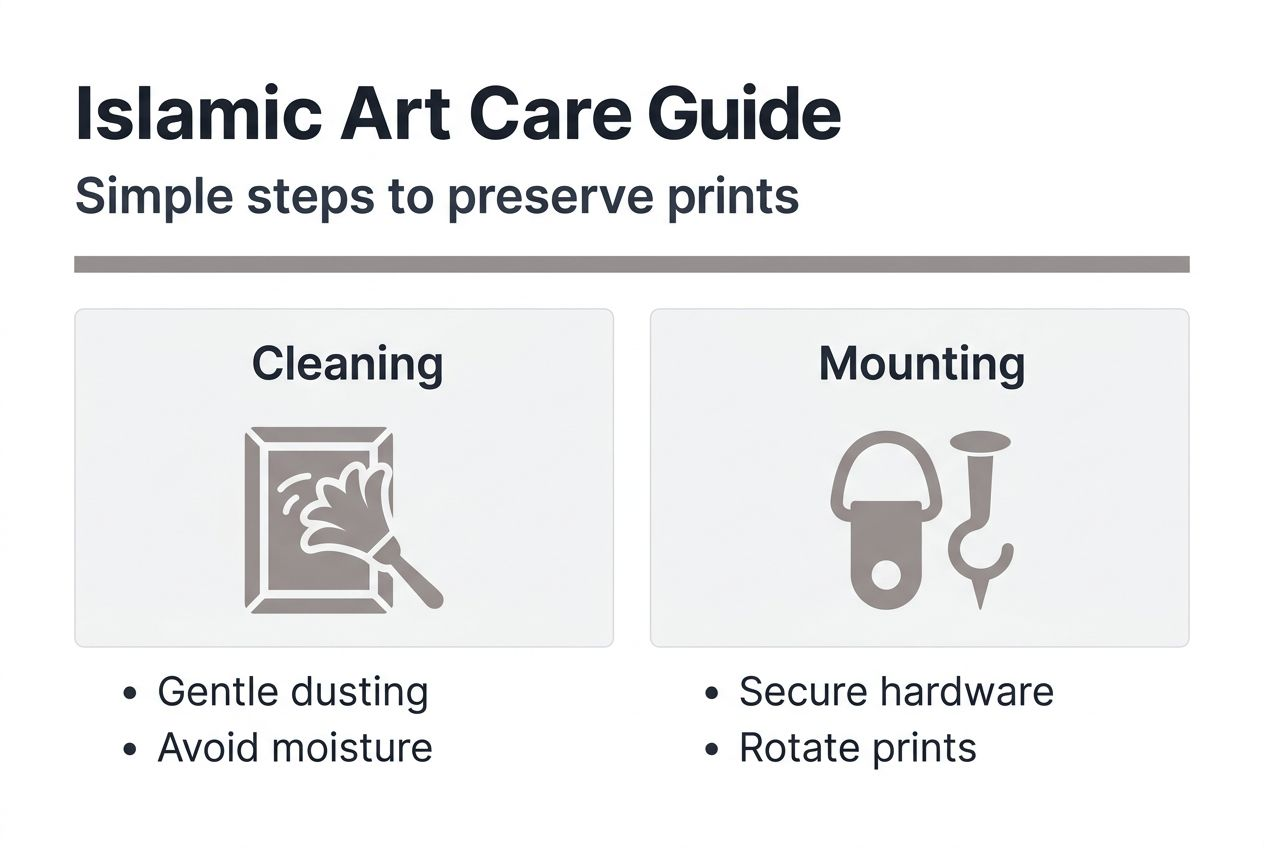
Dust prints twice weekly with a soft microfiber cloth. Particles accumulate quickly, dulling colours and damaging paper surfaces over time. Gentle circular motions remove dust without scratching. Avoid chemical cleaners that degrade print quality.
Environmental control is crucial. Direct sunlight causes fading and paper degradation. Position prints away from windows or use UV-filtering glass. Control humidity to prevent mould growth, especially in Pakistan's varied climate zones.
Follow these maintenance practices:
- Dust gently twice weekly using microfiber cloths
- Avoid direct sunlight exposure to prevent fading
- Maintain moderate humidity levels (40% to 60% ideal)
- Inspect prints biannually for mould, tears, or discolouration
- Use cleaning methods suitable for Luster Pro paper
- Address issues immediately to prevent worsening damage
Pro Tip: Rotate prints occasionally if you own multiple pieces. This distributes light exposure evenly across your collection. It prevents some prints from fading faster than others.
Luster Pro paper tolerates gentle cleaning better than standard papers. Its scratch-resistant surface withstands light wiping. Still, always use soft materials and minimal pressure. Harsh scrubbing damages even the most durable prints.
Learn more about Islamic art cleaning and care practices. Consistent attention preserves both aesthetic and spiritual value. Your prints remain beautiful focal points for years, inspiring reflection and pride.
Common mistakes and how to avoid them
Many display errors diminish Islamic art's spiritual and aesthetic impact. Overcrowding walls with Islamic art reduces spiritual impact and visual appeal in 35% of homes. Learning these pitfalls helps you maintain reverence and beauty.
Overcrowding walls creates visual chaos. Each print competes for attention rather than commanding focus. Space pieces thoughtfully. Let each artwork breathe and inspire contemplation individually.
Inappropriate placement compromises cultural respect. Kitchens and bathrooms are unsuitable for Qur'anic verses and sacred calligraphy. These spaces lack the reverence such art deserves. Stick to living areas and prayer rooms.
Avoid these common errors:
- Overcrowding walls with too many prints close together
- Placing Islamic art in kitchens or bathrooms
- Using improper mounting tools that damage prints or walls
- Neglecting regular maintenance leading to dust buildup and fading
- Exposing prints to direct sunlight without UV protection
- Ignoring humidity control in moisture-prone areas
Improper mounting tools cause sagging, tears, and wall damage. Standard nails may not support frame weight adequately. They can also mark walls permanently. Use appropriate hardware designed for your wall type and print weight.
Neglecting maintenance accelerates deterioration. Dust accumulation dulls colours and damages paper fibres. Mould grows unnoticed in humid conditions. Regular inspection catches issues early when they're easiest to fix.
Keep displays focused and simple. Quality beats quantity every time. A few well-placed, authentic pieces create more spiritual impact than crowded walls. Review common display errors and solutions for additional guidance. Thoughtful display elevates your home's atmosphere significantly.
Expected outcomes: what to expect from proper Islamic art display
Correctly displayed Islamic art transforms homes spiritually and aesthetically. You'll notice immediate and long-term benefits. These outcomes justify the care and investment required.
Enhanced spiritual ambiance becomes evident in prayer and living rooms. Qur'anic calligraphy inspires reflection and connection to faith. Family members report feeling more centred and contemplative. The home becomes a sanctuary that nurtures spiritual growth.
Cultural identity strengthens through authentic art displays. Guests recognise and appreciate the thoughtful curation. Your home communicates pride in Pakistani Muslim heritage. This connection to tradition enriches daily life meaningfully.
Expect these tangible benefits:
- Enhanced spiritual atmosphere fostering reflection and inspiration
- Stronger cultural identity and pride through authentic pieces
- Increased home value and appeal from tasteful, meaningful decor
- Long-lasting beauty and durability with proper care
- Positive feedback from family and guests appreciating the inviting environment
- Reduced need for frequent replacements due to quality materials
Quality prints on Luster Pro paper maintain vibrancy for 15 or more years. This longevity means your investment delivers value across decades. Colours remain rich, and details stay sharp with minimal maintenance.
Home value increases through thoughtful decor choices. Potential buyers appreciate culturally meaningful touches. Your space stands out in property markets. More importantly, you enjoy these benefits daily whilst living there.
Family and guests respond positively to well-curated Islamic art. They feel welcomed into a space that honours faith and culture. Conversations naturally flow toward spiritual and cultural topics. Your home becomes a gathering place that nurtures community bonds.
Discover authentic Islamic art prints at For Soouq
Transform your home with authentic Islamic prints from For Soouq. Their collection features expertly curated calligraphy and geometric motifs matching Pakistani cultural needs.
Every print uses premium Luster Pro paper ensuring durability and vibrancy. You'll find pieces suitable for prayer rooms, living areas, and hallways. The shop's Islamic prints collection offers diverse options at various price points.
Explore stunning Islamic calligraphy art that brings spiritual depth to your walls. Their dua sabr shukr prints remind families of patience and gratitude daily.
Pro Tip: Check For Soouq's detailed size guides before ordering. This ensures prints fit your wall spaces perfectly without guesswork.
For Soouq specialises in Islamic wall art printed with high-quality materials. Their London-based collection serves Pakistani Muslim communities seeking authentic, respectful decor. Begin your journey towards a harmonious, spiritually enriched home today.
Frequently asked questions
What is the best location to display Islamic art in a Pakistani home?
Prayer rooms and living areas are ideal for placing Islamic art to maintain respect and enhance spiritual ambience. These spaces balance visibility with reverence, allowing family and guests to appreciate the art meaningfully. Avoid kitchens and bathrooms where cultural reverence may be compromised. Learn more about Islamic art placement tips for specific room recommendations.
How often should Islamic art prints be cleaned and inspected?
Dust prints gently twice a week to remove particles that dull colours and damage paper surfaces. Inspect art for mould, tears, or discolouration at least twice a year, especially in humid regions where moisture accelerates deterioration. Regular attention prevents minor issues from becoming costly repairs. Review Islamic art care guidelines for detailed maintenance routines.
Can using improper mounting materials damage Islamic art prints?
Improper mounting can cause sagging, tears, or permanent wall damage that compromises both art and structure. Standard nails often lack adequate support for framed prints, leading to accidents. Use archival-safe hardware designed for delicate prints to maintain appearance and structural integrity. Explore mounting materials recommendations for specific product suggestions.
What materials are best for Islamic art prints to ensure longevity?
Luster Pro paper offers superior scratch resistance and vibrancy compared to standard glossy papers. It maintains colour depth and withstands environmental factors like humidity and light exposure better. Archival quality prints resist fading and last for many years with proper care, often exceeding 15 years. Discover high-quality print materials available for Pakistani Muslim homes.